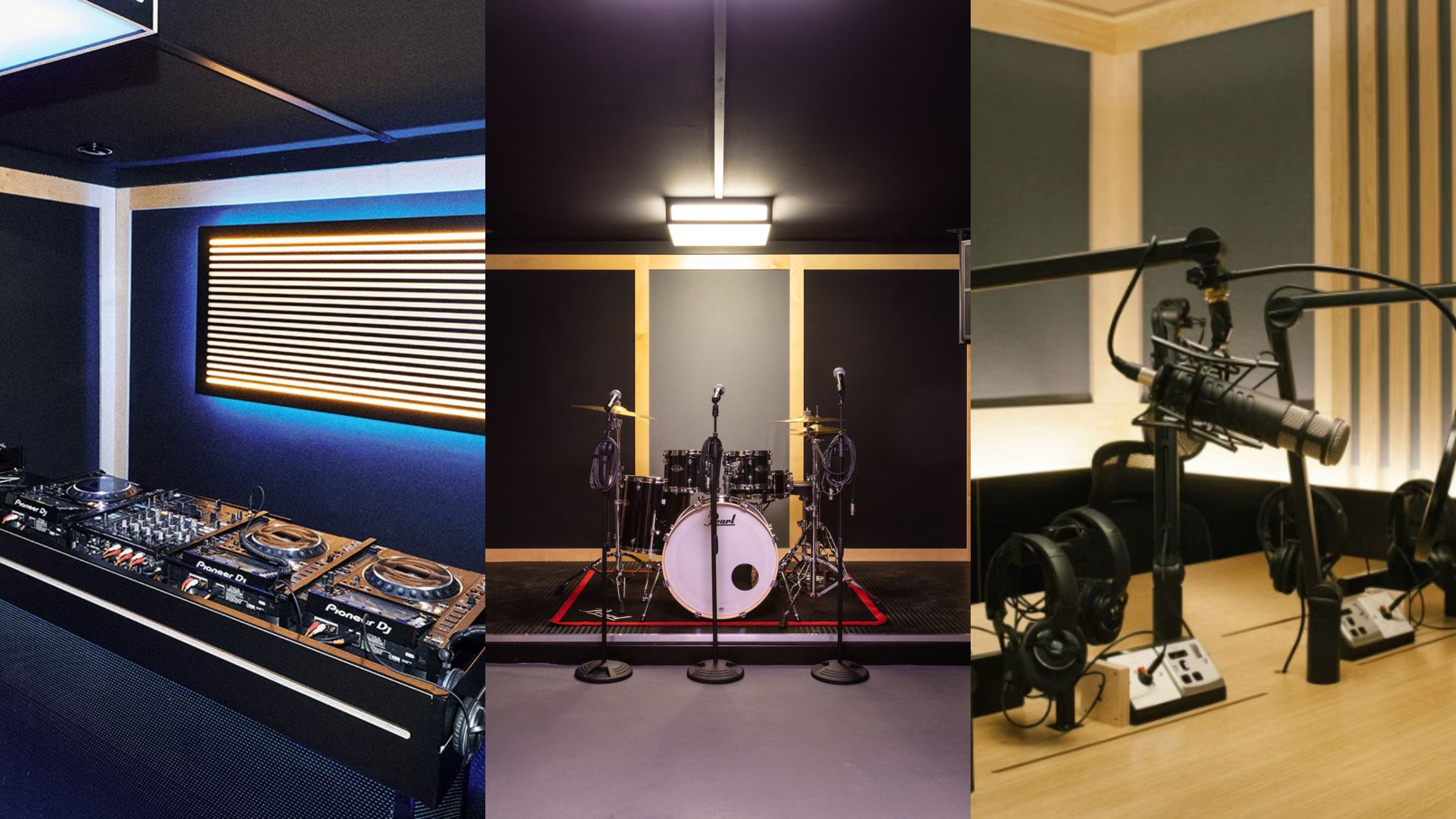
The Problem: Creative spaces are broken.
In most cities, artists, podcasters, and musicians struggle to find quality studios that are affordable, flexible, and accessible. Traditional studios are often owned by individuals renting out leftover space, with inconsistent quality, outdated equipment, and bookings handled through DMs or WhatsApp messages.
There was no standardised experience, no data, and no infrastructure to support the new generation of creators who want to work on-demand, 24/7, without friction.
The experience was inconsistent: poor sound isolation, unreliable access, unclear pricing, and almost no tech integration.
UNKNOWN Studios was designed to fix that.
The idea was created to address that gap; to imagine what a modern, automated creative space could look like if designed from scratch.
The idea was simple: to build a network of fully automated, modular studios that could operate without staff, accessible anytime, anywhere. Users would book online, unlock the room with a code, and record, rehearse, or create with no friction.
The design combined industrial simplicity with high acoustic performance, while maintaining a brand aesthetic rooted in independence and underground culture.
The Business Model
UNKNOWN was designed to operate through a hybrid model combining ownership, licensing, and membership systems:
Owned Studios in strategic urban areas: Melbourne was planned as the first prototype.
Licensed Partners could operate under the UNKNOWN brand using the same physical and digital systems.
Memberships & Credits gave regular creators discounted access and cross-city flexibility.
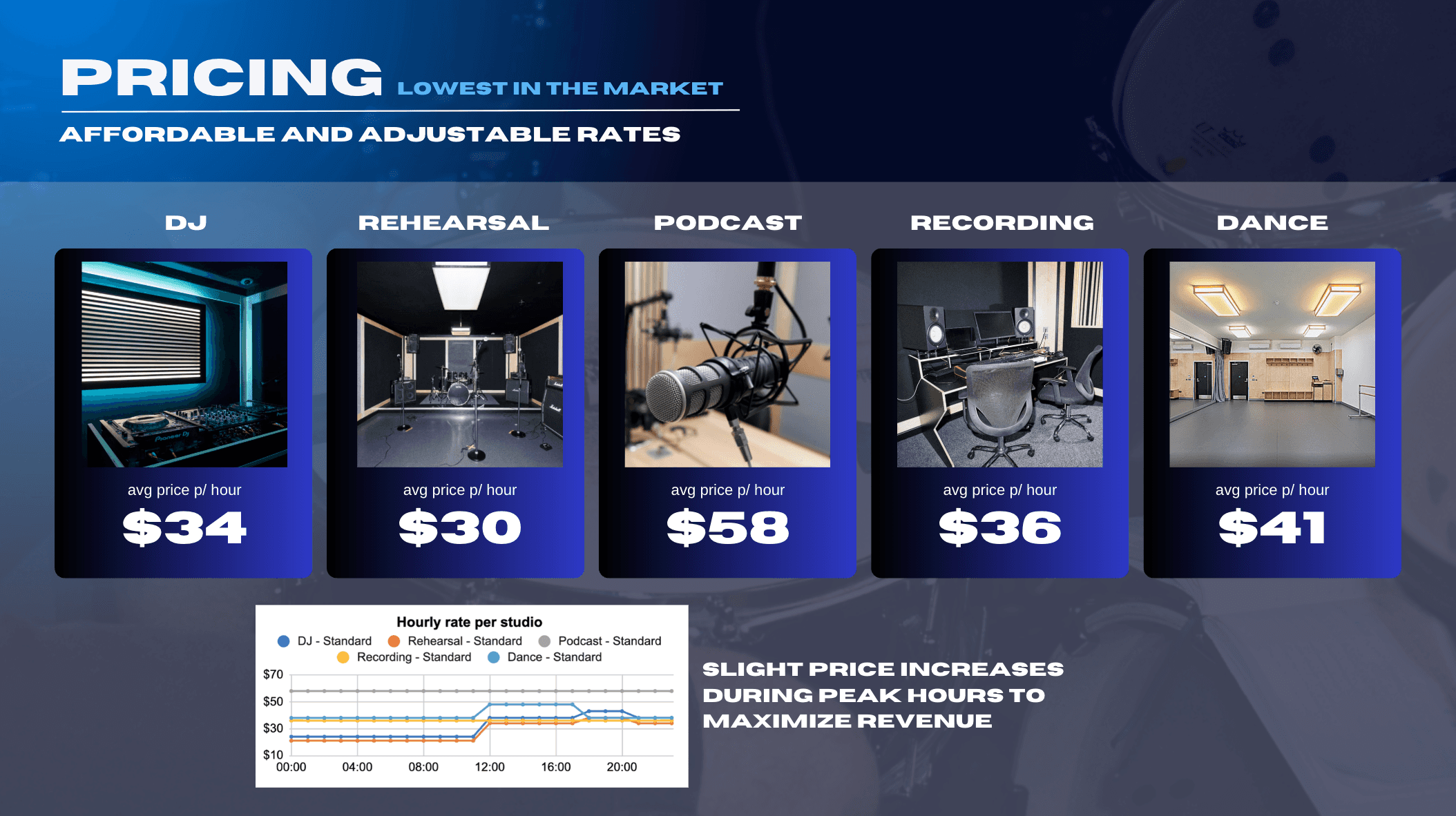
A central digital platform would handle bookings, payments, and door access while collecting usage data to optimize pricing, occupancy, and expansion decisions.
Financial Framework
The good: Each unit was modelled to be cost-efficient, replicable, and quick to deploy:
CapEx: around 50% lower than traditional recording studios due to modular design.
Breakeven Point: estimated at 12–18 months with target utilization between 55–65%.
Margins: peak-hour profitability above 70%, driven by automation and minimal staffing.
Scalability: new sites could be assembled and operational within 30 days.
The model’s scalability and predictable cost structure were key pillars for potential investor discussions.
The bad: The project required an initial investment of nearly AUD 1m (≈ USD 660k) before opening its doors; a figure driven by high construction costs, acoustic engineering, and professional-grade recording equipment.
Unlike digital ventures, UNKNOWN carried heavy upfront CapEx with no immediate payback path. The physical nature of the model (bricks, cables, soundproofing, air control) meant capital had to be committed before the first dollar of revenue arrived.
To gain traction in such a competitive creative market, the financial model also included an aggressive marketing allocation of 10–20% of revenue, largely for partnerships, digital acquisition, and community events.
And, as with any facility-based business, a 10% annual liquidity reserve was modelled as a safeguard for maintenance, equipment replacement, and inevitable breakdowns.
These variables combined to make UNKNOWN both ambitious and fragile: operationally sound, but financially exposed. A perfect example of how even the best-designed creative infrastructure can be weighed down by its own physical cost.