the story

CASA was the project I worked on the hardest, by far.

It began as a spark during my marathon-running years, when my best friend Callum introduced me to saunas. My first experience was awful, but over time I realised that sauna was one of those things you only understand as an adult: the calm, the focus, the clarity. It became a ritual that genuinely changed my life.

I started seeing what others didn’t: the sauna wasn’t just about wellness! It was a culture, a movement.
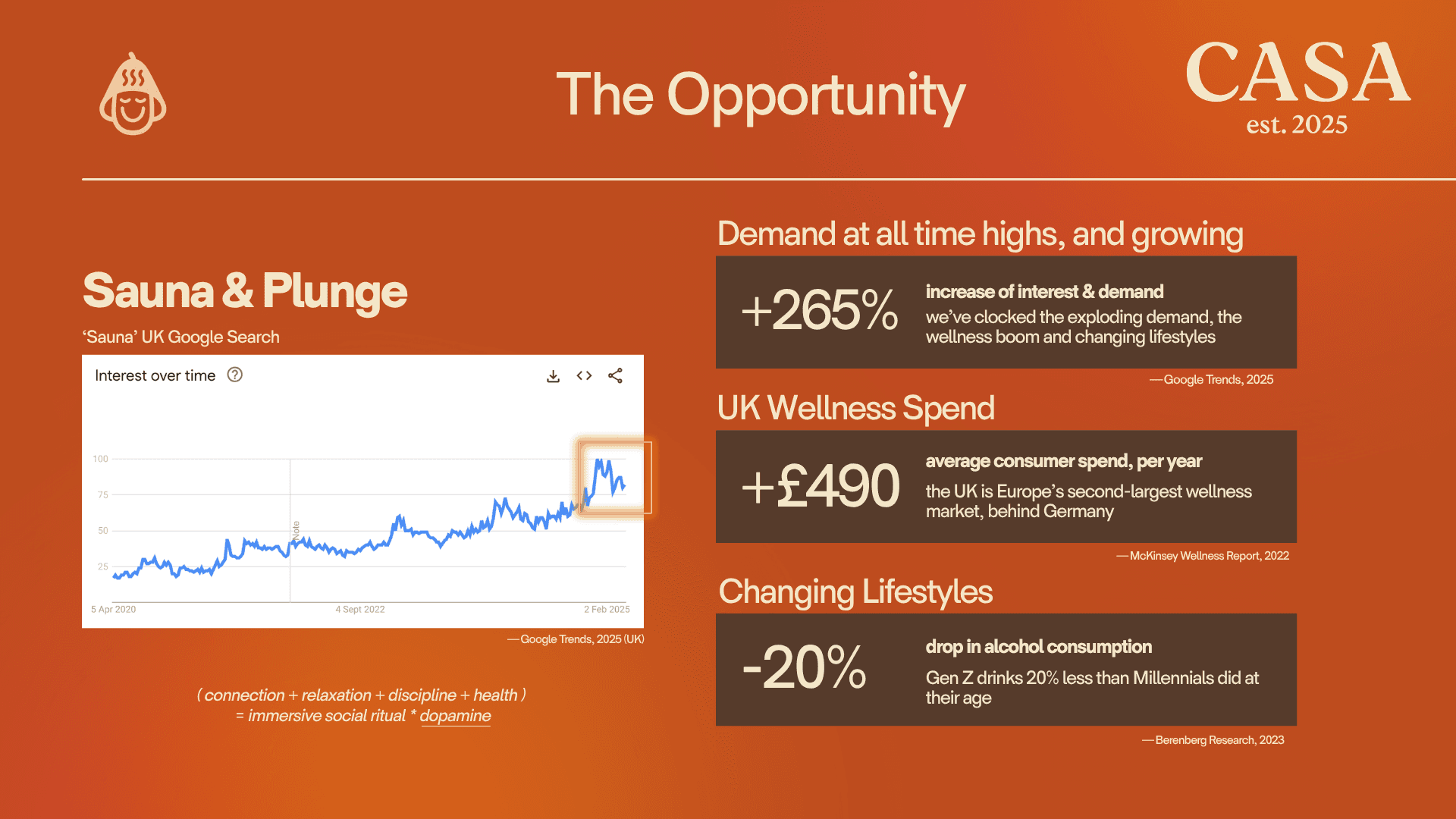
It was connection, routine, community, and discipline wrapped into one. Data backed it up, too. You didn't have to be a genius to jump into Google Trends and find out about it. There were other signals too, such as sold-out community saunas, long booking lists. London was late to the party.

So I went all in. I designed the website, signed up early users, registered a limited company with HMRC, and printed and hand-delivered envelopes around London Fields and Hackney. I pitched to angel investors (including executives from Google and Airbnb) and met with banks to negotiate rates for more than £300k in loans. I brought on a co-founder, assembled a team to cover financials, architecture, and branding, and even took investor calls from my corporate office during lunch breaks.

For a moment, I genuinely believed this was it, the project I was meant to build.
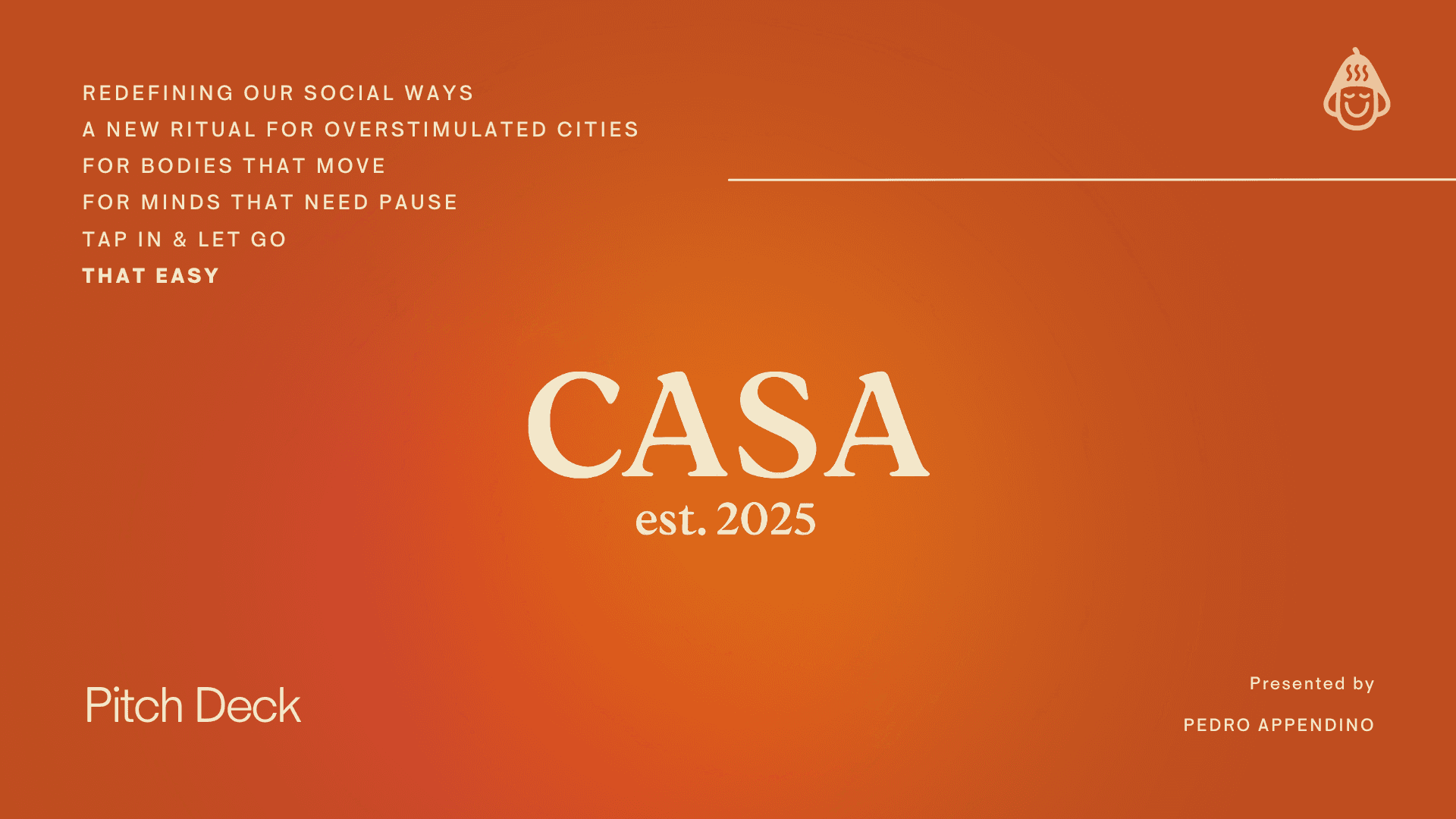
the model

The Problem: Modern life has made wellness both expensive and isolating.


Gyms are transactional, spas feel like an occasional luxury or a treat, and the few social spaces left revolve around alcohol or drugs. Saunas (despite their proven health and social benefits) were either overpriced, overbooked, or underground.

London, one of the world’s most connected cities, somehow lacked accessible, social wellness infrastructure.
People wanted to disconnect, socialise and not have to feel like shit the day after, but had very few places to do it.

Additionally, no saunas had flexible booking systems. If you enjoy saunas, being rushed out of the facilities is one of the worst feelings; sometimes, you need 5 more minutes or 10. This is where CASA adds value.


The Solution

CASA was designed as a social wellness house, not a spa.
A place where people could tap in, stay as long as they needed, and actually connect.

The concept was simple but powerful:

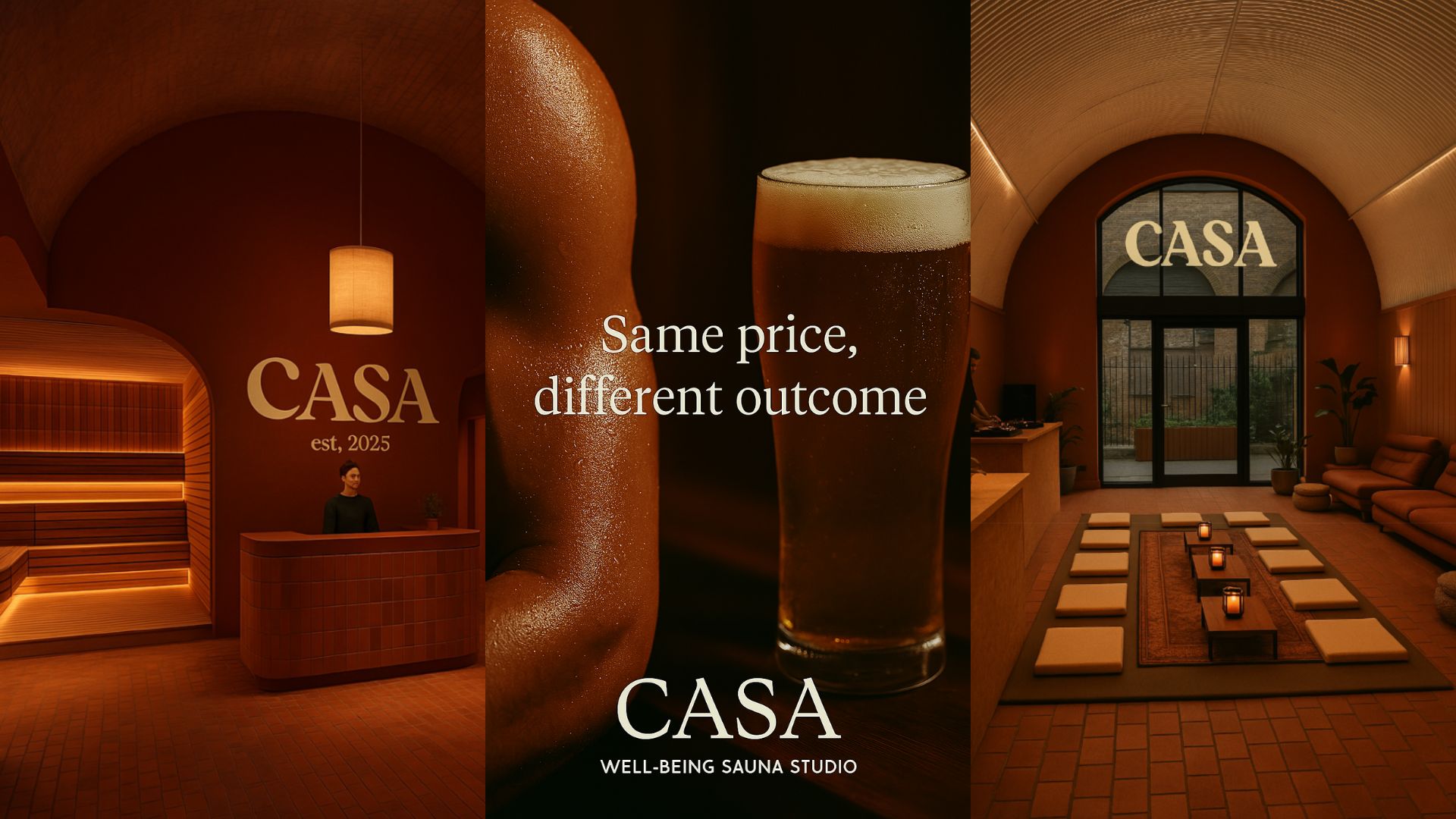
  • Design-led: modern brutalist interiors inspired by Sarah Carpenter; warm clay tones, soft light, and tactility that makes you feel something.

  • Technology-driven: keyless NFC entry and a custom booking system allowing pay-per-minute access — a first in the UK.

  • Community-first: small capacity, communal lounges, great coffee, and local partnerships.

  • Accessible pricing: flexible sessions and memberships that made wellbeing available to everyone, not just those who could afford a £70 spa visit.

CASA wasn’t just a sauna; it was a new ritual and routine for overstimulated cities.


The Business Model

CASA operated on four core revenue streams:

  1. Pay-per-minute access – an industry-first system letting users pay only for the minutes they stayed.

  2. Memberships – daily-access passes offering 30% discounts for frequent users.

  3. Events & Private Hires – group bookings and community sessions outside regular hours.

  4. Coffee & Retail – barista-quality coffee and retail collaborations with local brands.

With average visit times of 25–33 minutes, CASA achieved fast turnover and lean operations, minimal staff requirements, and operating margins between 30–50%, significantly higher than cafés or gyms.


Financial Framework

The model projected £80K in monthly sales at full capacity and a profit margin averaging 22–50%, scaling to profitability within the first operational year.

  • CapEx: £400K – £500K

  • Valuation: £1.2M

  • Debt Structure: 36-month loan plan with early repayment targets.

  • Break-even: 9–12 months

  • Expansion: plan to open a second location within two years, potentially franchise the business and develop a sauna-platform aggregator (think “Skyscanner for saunas”).

By mid-2025, CASA had raised over £365K through a mix of equity and term loans, with just £150K left to close the round. But things took a turn for the worse, once again.

Create a free website with Framer, the website builder loved by startups, designers and agencies.