The Problem: Structure in place, pending financial guarantees
Traditional livestock farming in Argentina often suffers from slow capital rotation and inconsistent production standards. For many family-run operations, the challenge is transitioning from a legacy-driven model to a modern, professionalised business that can withstand market volatility.
In Córdoba (Argentina), the gap between high-quality genetic potential (like the renowned Limousin breed) and efficient market delivery is often wide. Without intensive fattening systems, producers face longer cycles, higher exposure to climate risks, and missed opportunities in the premium meat segment. There is a clear need for a production model that bridges the gap between historical roots and industrial profitability.
The Solution
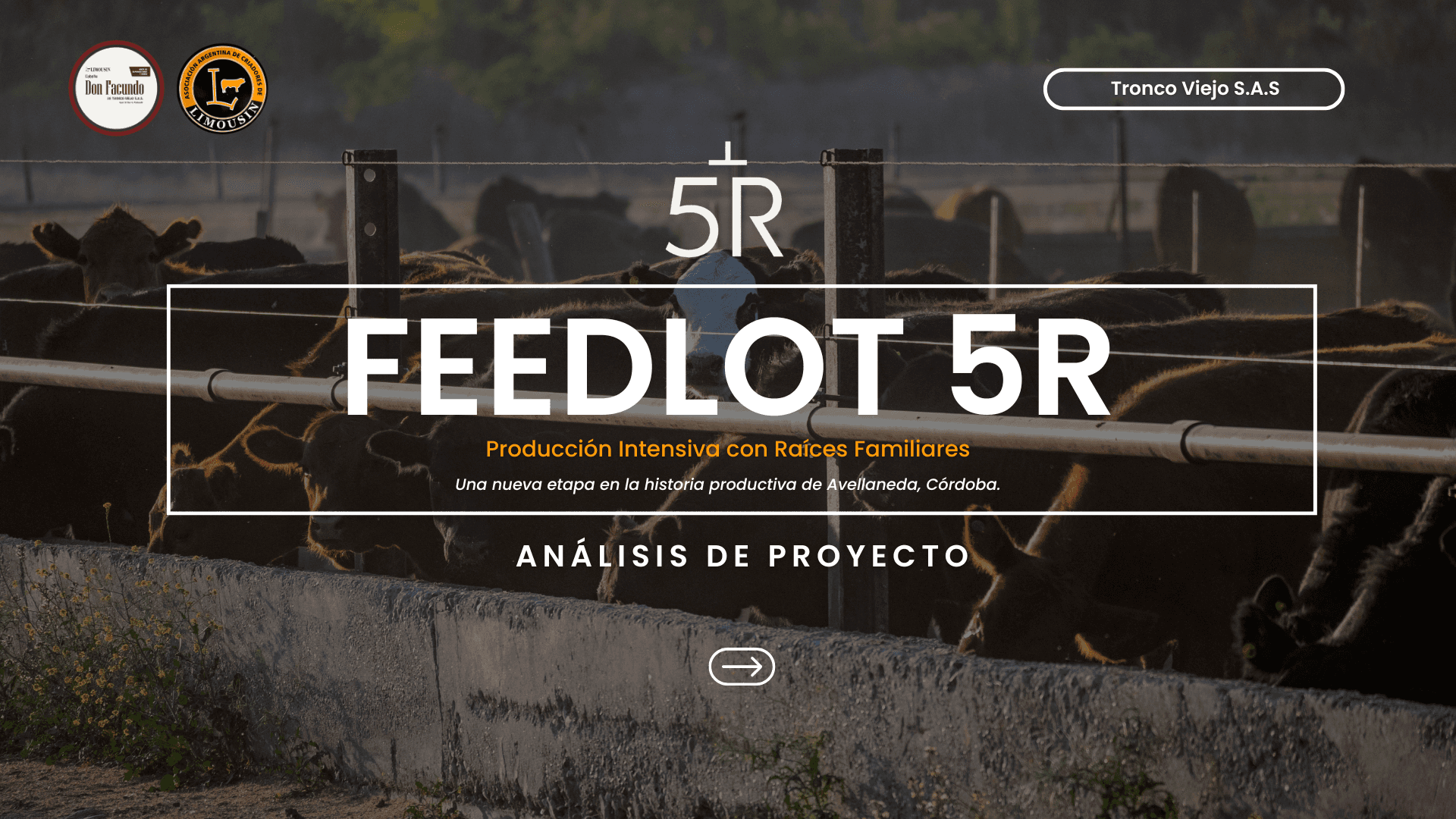
Feedlot 5R is an intensive production project in Avellaneda, Córdoba, designed to transform the Romanutti family’s ranching legacy into a high-performance agribusiness. The concept is built on the 5R Philosophy: Roots, Profitability, Responsibility, Results, and Respect (Raíces, Rentabilidad, Responsabilidad, Resultados, Respeto).
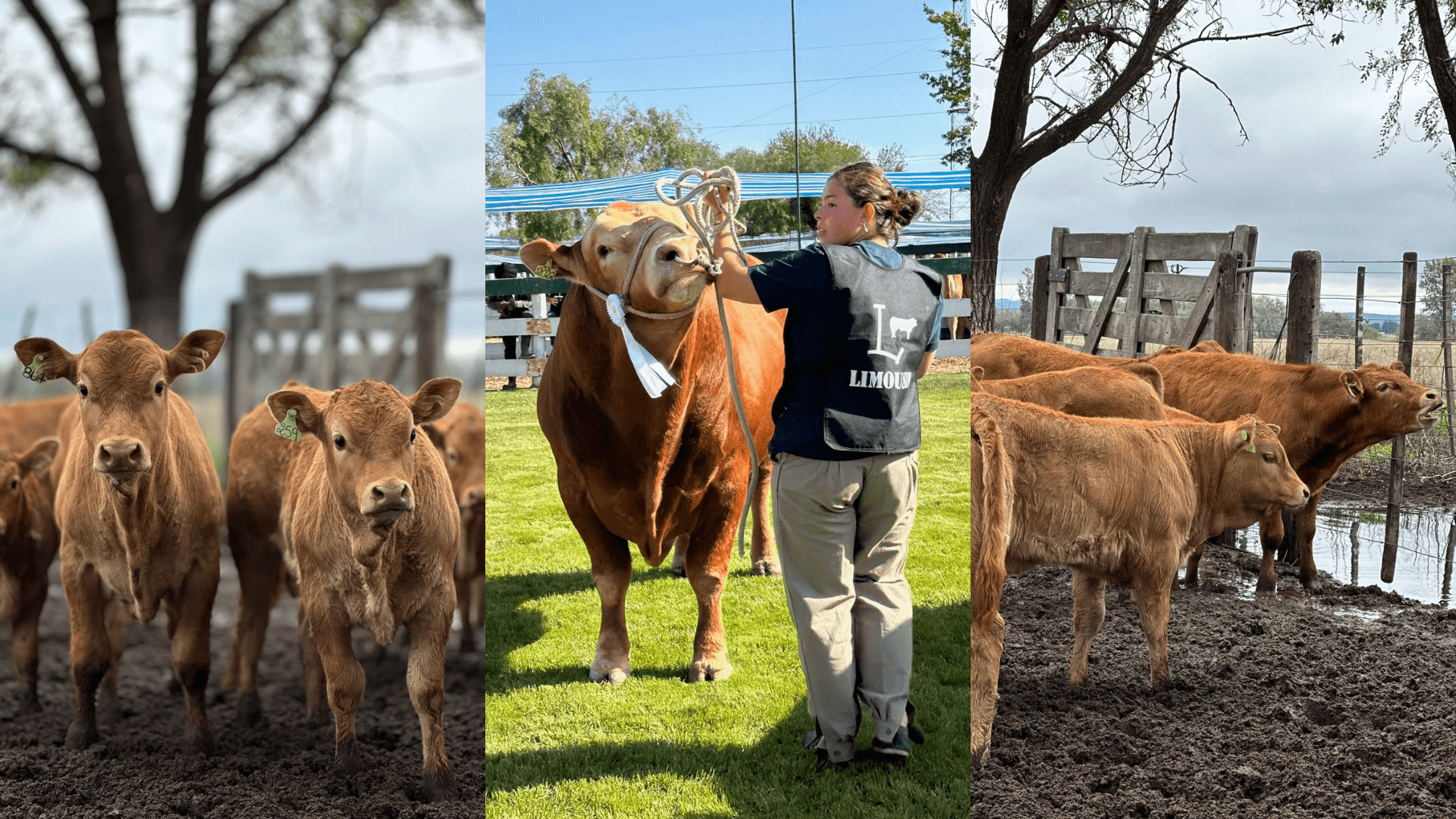
Genetic-Led Fattening: Utilizing the award-winning Limousin genetics from Cabaña Don Facundo to ensure superior meat yields and market premiums.
Intensive Rotation: A system designed for high turnover, moving animals through optimized 110–120 day fattening cycles.
Modern Infrastructure: A facility scaling toward a 500-head capacity, utilizing tech-driven nutrition (Dieta 1) to maximize weight gain efficiency.
Sustainable Integration: Merging traditional cattle raising with modern intensive techniques to ensure a model that is both environmentally responsible and economically resilient.
The Business Model
Feedlot 5R operates on a high-velocity rotation model focused on the "purchase-fatten-sell" cycle.
Continuous Rotation: Capital is reinvested through constant cycles of buying 180kg calves and selling 400kg+ finished steers.
Scalable Capacity: Starting with initial cohorts and scaling to a 500-head limit, allowing for significant operational leverage.
Integrated Supply Chain: Leveraging local resources, such as 17 hectares of dedicated corn planting, to secure consistent, high-quality feed while controlling costs.
High Performance: Achieving high conversion rates (FCR) through professionalized nutrition management, aiming for consistent weight gains per animal across all cycles.
Financial Framework
The project projects a steady growth path, scaling from a startup phase to a robust, high-revenue operation by Year 6.
Revenue Projections: Year 1 revenue is estimated at $153,333 USD (167 heads sold), scaling to $674,765 USD by Year 6 (714 heads sold).
Profitability & Margins: The model maintains a net margin between 3% and 5%, reflecting a lean, volume-driven operation.
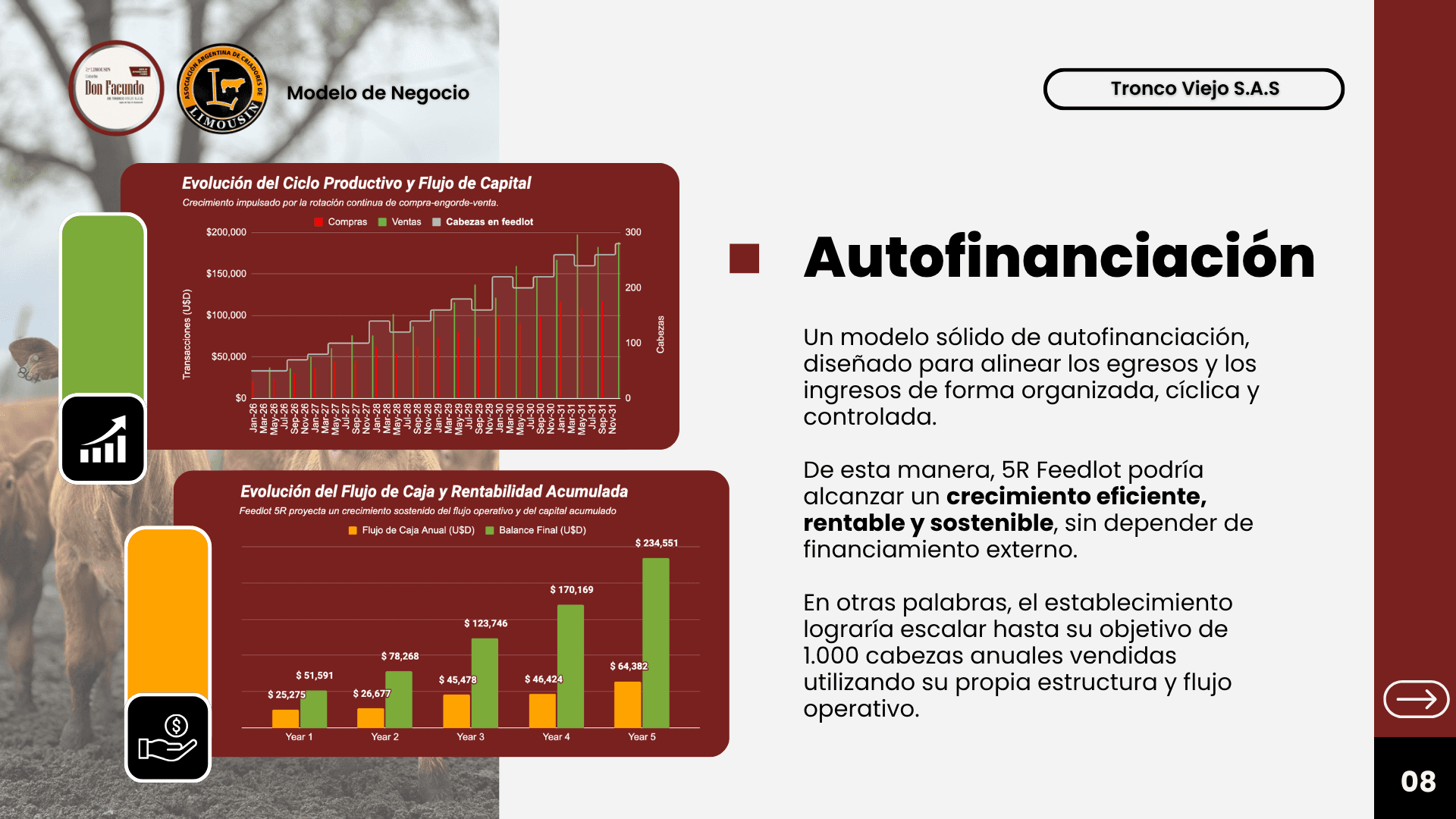
Balance Sheet Growth: Projected accumulation of capital with a final balance climbing toward $234,551 USD as the project matures.
Efficiency Metrics: Average gain per animal per cycle is projected at approximately $143 - $203 USD, depending on the specific cycle and meat-market pricing.
Strategic Growth: The financial model anticipates a sustained increase in operative flow, with total annual sales in ARS scaling from $225M in Year 1 to over $991M by Year 6.